The KODAK Slide N Scan Max is designed to turn selected slides and film negatives into digital images with a streamlined feed tray and simple on-device editing.
This kodak slide n scan max review looks at how its format support, resolution options, and direct SD-card saving fit a home archiving project.
Slide N Scan Max Review Summary
The quick verdict
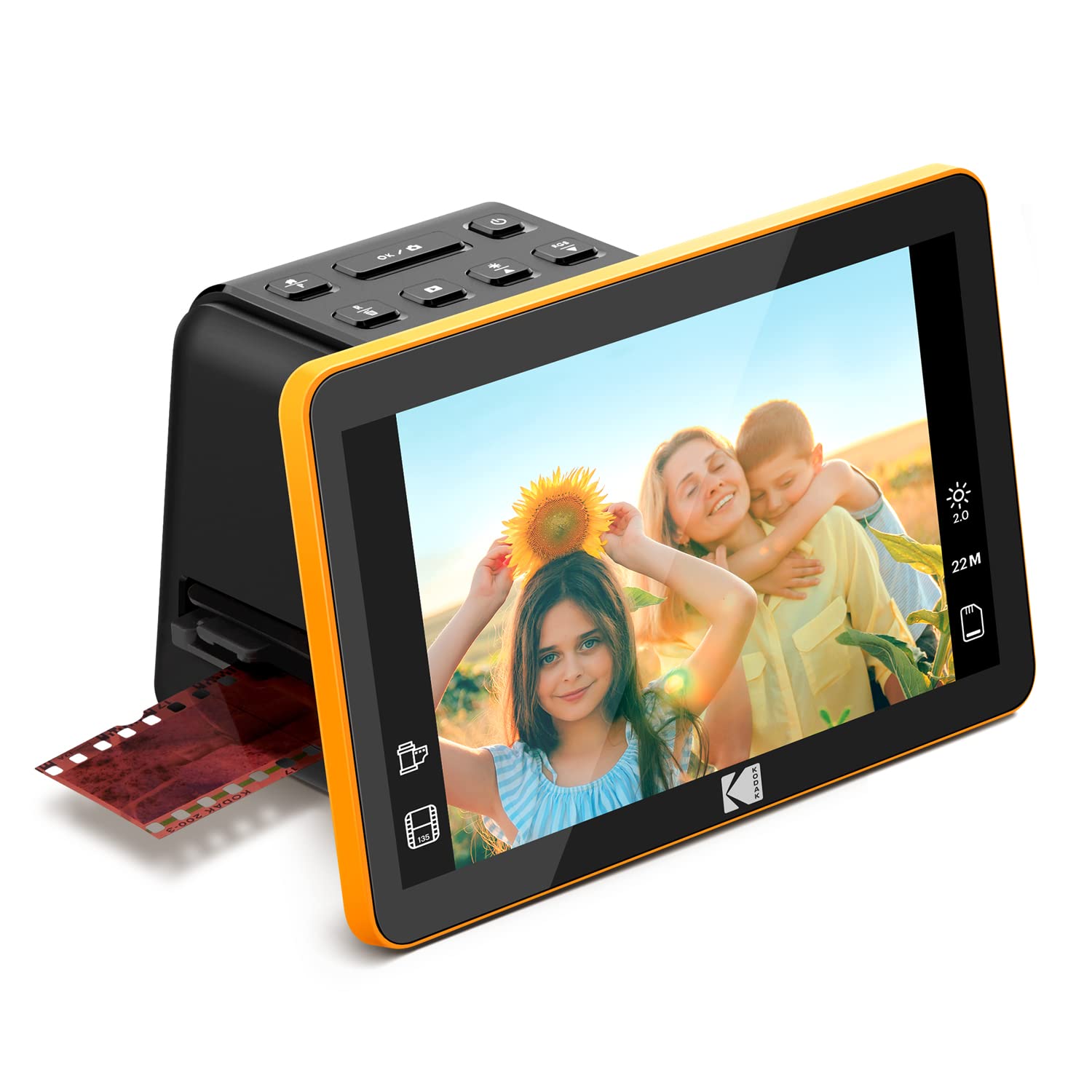
1,000+ ratings
Read Amazon ReviewsKODAK Slide N Scan Max
A practical fit for families digitizing mixed-format slides and negatives who want direct SD-card saving and a computer-free scanning workflow.
- Supports 135, 110, and 126 film formats, along with slides and color or black-and-white negatives.
- Moving tray is designed to feed film without constant repositioning.
- Saves directly to SD or SDHC cards up to 32GB, allowing a computer-free scanning workflow.
- 13MP CMOS sensor with image output up to 4208 × 3120 and 22MP interpolation.

Pros
- Supports several common film formats and both color and black-and-white negatives.
- Direct SD-card saving avoids requiring a computer during scanning.
Consider before buying
- The SD/SDHC capacity limit is 32GB, so larger archiving projects may require managing or changing cards.
- The maximum output figure includes interpolation; buyers focused on captured sensor detail should weigh the 13MP CMOS sensor specification.
Read the full review summary
This scanner combines support for 135, 110, and 126 film with both color and black-and-white negatives, as well as slides.
Its moving tray is intended to feed film without constant repositioning, which could make a sizable batch easier to work through than a workflow that requires handling each frame separately.
Direct saving to SD or SDHC cards up to 32GB means a computer is not required for the scanning workflow described here.
The 13MP CMOS sensor captures images up to 4208 × 3120, with 22MP interpolation; that gives buyers a choice of output approach, while the interpolated figure should not be mistaken for additional captured sensor detail.
The buying factors
Slide N Scan Max Scorecard
Editorial scores reflect listed features and buyer fit; they are not laboratory measurements or customer ratings.
Film format coverage
Handles 135, 110, and 126 formats, plus slides and color or black-and-white negatives.
Batch handling
The moving tray is designed to feed film without constant repositioning.
Standalone workflow
Direct SD or SDHC saving supports scanning without a computer, up to 32GB.
Output flexibility
Offers capture up to 4208 × 3120 from a 13MP CMOS sensor and 22MP interpolation.
Editing accessibility
One-touch editing is presented as a way to resize, convert, and adjust images without complex menus.
System compatibility clarity
Windows 7 is listed as the minimum system requirement; check that your intended computer setup is supported if you plan to connect one.
Key Features and Specifications of Slide N Scan Max
- Supports 135, 110, and 126 film formats, along with slides and color or black-and-white negatives.
- Moving tray is designed to feed film without constant repositioning.
- Saves directly to SD or SDHC cards up to 32GB, allowing a computer-free scanning workflow.
- 13MP CMOS sensor with image output up to 4208 × 3120 and 22MP interpolation.
- One-touch editing options cover resizing, converting, and image adjustment.
- Compact unit measures 6.69 × 5.35 × 4.45 inches and weighs 16 ounces.
- Windows 7 is listed as the minimum system requirement; USB is the connection type.
Pros and Cons of Slide N Scan Max
Pros
- Supports several common film formats and both color and black-and-white negatives.
- Direct SD-card saving avoids requiring a computer during scanning.
- Moving feed tray is intended to reduce repeated film repositioning.
- One-touch editing keeps basic image adjustments accessible.
Consider before buying
- The SD/SDHC capacity limit is 32GB, so larger archiving projects may require managing or changing cards.
- The maximum output figure includes interpolation; buyers focused on captured sensor detail should weigh the 13MP CMOS sensor specification.
- Windows 7 is the only minimum system requirement provided, so confirm computer compatibility if you intend to use a connected workflow.
Who Should Buy Slide N Scan Max?
Good fit
Consider the Slide N Scan Max if you have a mixed box of 135, 110, or 126 film, slides, and color or black-and-white negatives, and want a straightforward way to make digital copies.
Its combination of a feed tray and one-touch resizing, conversion, and adjustment is aimed at keeping routine scanning approachable.
It also suits someone who prefers saving to removable storage and organizing files later, since the scanner can save directly to SD or SDHC cards up to 32GB.
Before starting a large archive, plan how you will divide and back up the scans across cards, and check that the card capacity suits the size of the project.
Treat the resolution figures with care when deciding what quality you need.
The scanner uses a 13MP CMOS sensor and offers output up to 4208 × 3120 with 22MP interpolation, so the larger interpolated figure concerns output dimensions rather than extra native sensor pixels.
Who should skip it
Look elsewhere if your originals include film formats beyond 135, 110, and 126 or slides; the supported formats described here may not cover your collection. Check the exact format of your originals before choosing a scanner.
This may not be the best fit if your workflow depends on saving large projects to a single high-capacity card or on specific computer compatibility that you cannot confirm from the Windows 7 minimum requirement.
Verify your preferred setup before buying.
How the Slide N Scan Max Fits a Home Film Archive
A moving tray for repeated scans
The tray is designed to feed film without constant repositioning, which may help reduce interruptions when digitizing several frames.
For a large project, the practical benefit will depend on how your film is prepared and organized, so sorting by format before beginning can make the workflow easier to manage.
Format support and collection fit
Support for 135, 110, and 126 film covers multiple formats, and the scanner also accepts slides plus color and black-and-white negatives.
This makes it a candidate for collections assembled across different cameras or generations, provided the originals match those supported formats.
Understanding the resolution options
The 13MP CMOS sensor and the output figure of up to 4208 × 3120 with 22MP interpolation describe related but distinct parts of image capture.
Interpolation can increase output dimensions, but buyers who need to preserve fine detail for substantial enlargement should judge the result against their own intended use rather than treating the larger number as native sensor resolution.
A standalone saving routine
Direct SD and SDHC saving up to 32GB lets scanning happen without a computer in the workflow.
That is convenient for a simple transfer routine, though a large archive may need multiple cards and a deliberate backup plan; USB is also listed as the connection type for a connected setup.
Alternatives to Slide N Scan Max
Slide & Negative Scanners alternative
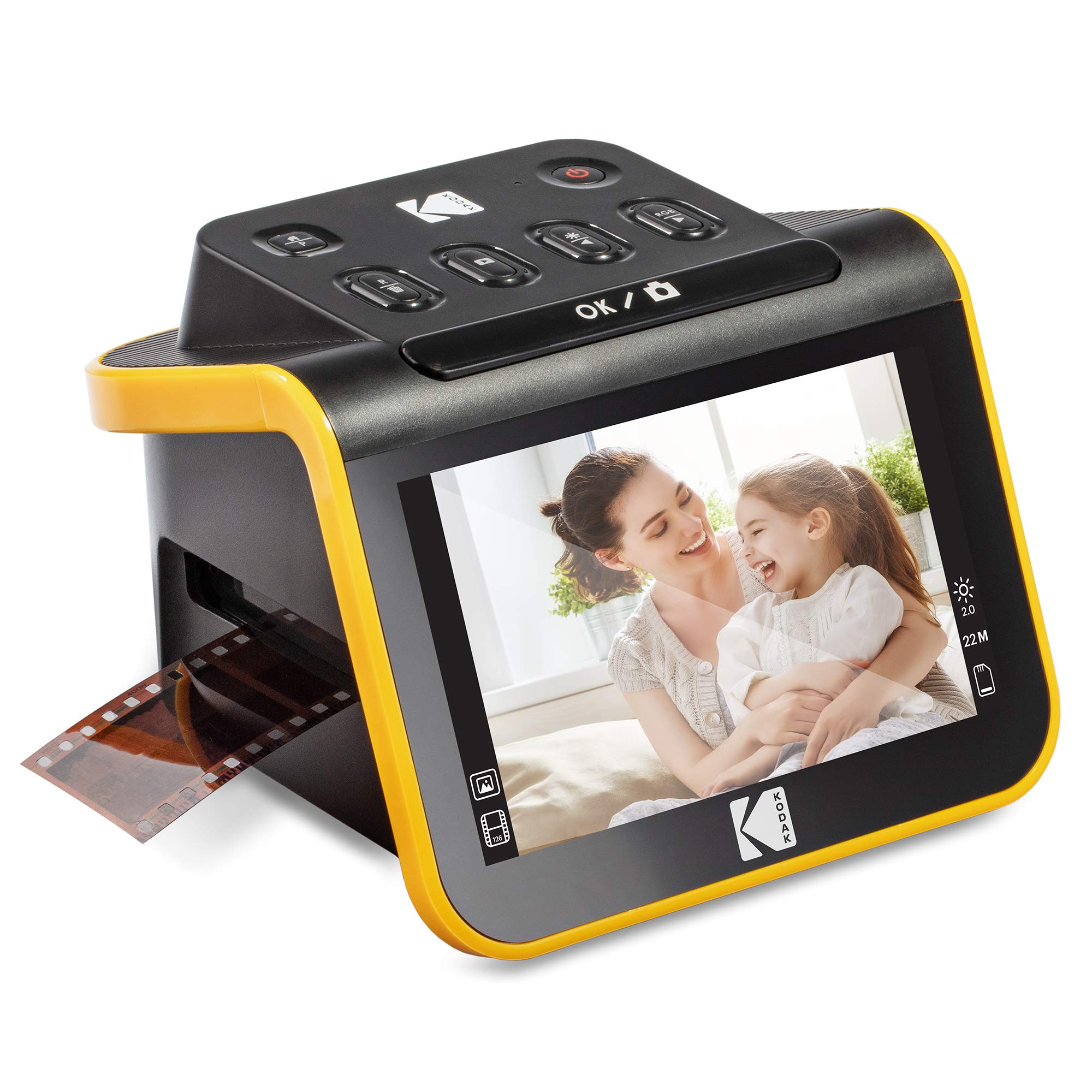
12,000+ ratings
Read Amazon ReviewsKODAK Slide N Scan Film & Slide Scanner
Choose the Max if the moving feed tray and its described one-touch workflow are the priorities. Consider this alternative if a built-in 5-inch screen for previewing and gallery viewing matters more to your scanning routine.
- This Slide N Scan model supports 135, 110, and 126 film and 50mm slides, has a 5-inch LCD with gallery mode, and includes HDMI and USB cables.
- It supports SD or SDHC cards up to 32GB.
- The Slide N Scan Max supports 135, 110, and 126 formats, uses a moving feed tray, and saves directly to SD or SDHC cards up to 32GB.
Slide & Negative Scanners alternative
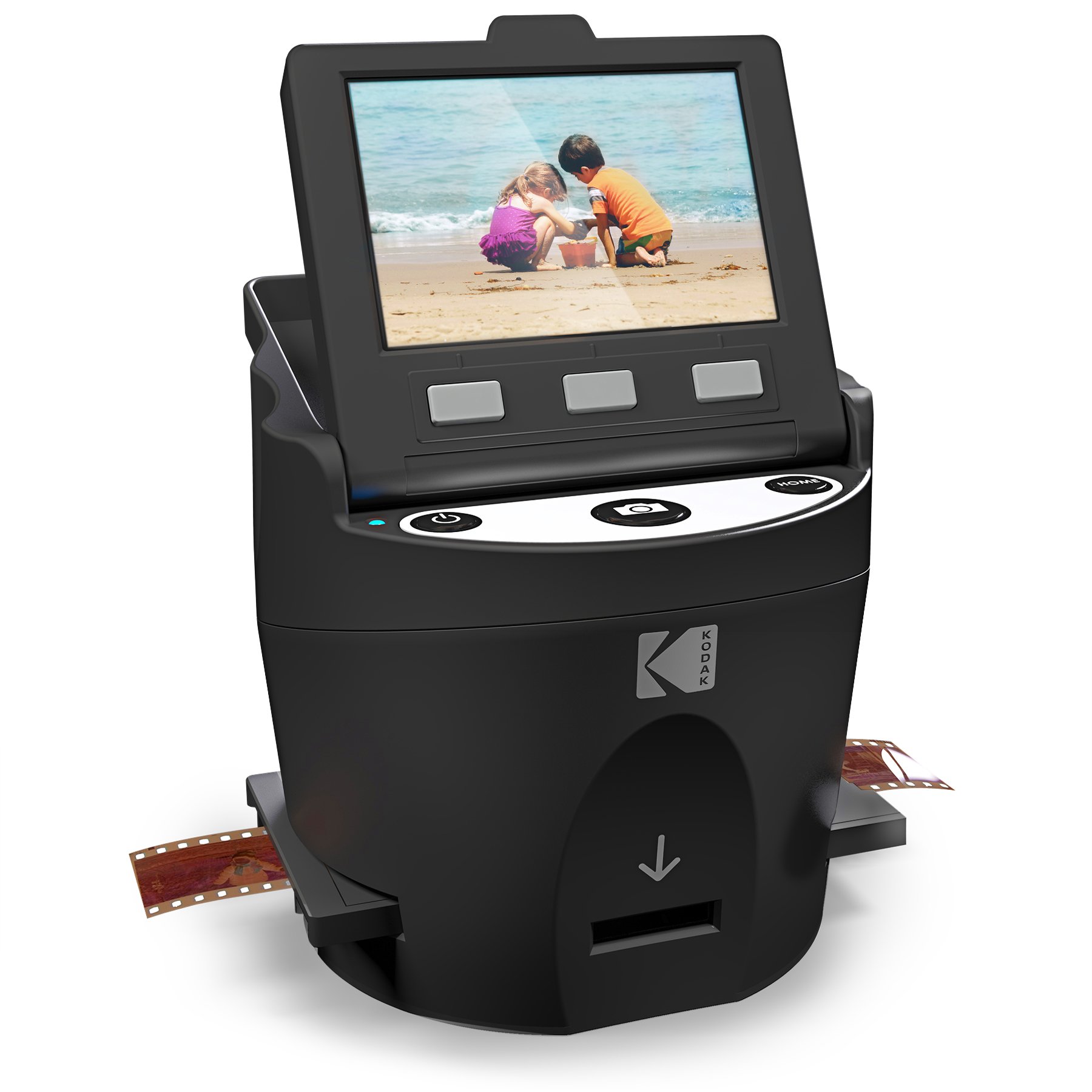
11,000+ ratings
Read Amazon ReviewsKODAK SCANZA
The Max is a straightforward match for a collection limited to its listed formats and a standalone workflow using cards up to 32GB.
The SCANZA is a better fit if your archive includes Super 8 or 8mm, or if its listed larger card capacity and adjustable screen better suit your process.
- The SCANZA supports 35mm, 126, 110, Super 8, and 8mm film, includes a 3.5-inch adjustable-tilt LCD, and supports SD cards up to 128GB.
- The Slide N Scan Max supports 135, 110, and 126 formats and saves to SD or SDHC cards up to 32GB.
Is Slide N Scan Max Worth It?
The KODAK Slide N Scan Max is worth considering for a home film archive that includes 135, 110, or 126 material and calls for a simple, computer-free saving routine.
Its moving tray and one-touch editing features support an accessible workflow, while its sensor and interpolated output figures give buyers useful context for setting image-quality expectations.
Before choosing it, confirm that your film formats are supported, that a 32GB card limit works for your project, and that any computer connection you plan to use fits your setup.
If those details align with your needs, the Slide N Scan Max offers a focused way to digitize a varied set of common slides and negatives.
Your review at a glance
1,000+ ratings
Read Amazon ReviewsKODAK Slide N Scan Max
A practical fit for families digitizing mixed-format slides and negatives who want direct SD-card saving and a computer-free scanning workflow.
- Supports 135, 110, and 126 film formats, along with slides and color or black-and-white negatives.
- Moving tray is designed to feed film without constant repositioning.
- Saves directly to SD or SDHC cards up to 32GB, allowing a computer-free scanning workflow.
- 13MP CMOS sensor with image output up to 4208 × 3120 and 22MP interpolation.